
“The pharmaceutical gold rush of the 2020s has a name, and it is GLP-1. If you have ever wondered how Hollywood stars and your next-door neighbors are suddenly achieving body transformations that once required surgery, you’ve found the answer. But behind the ‘miracle’ headlines lies a complex world of hormonal science, shifting U.S. insurance policies, and a 2026 pricing revolution that is making these drugs more accessible than ever before.”
Intro
GLP-1 (Glucagon-Like Peptide-1) receptor agonists have fundamentally redefined how the medical community treats obesity and Type 2 diabetes. Originally designed to manage blood sugar, these medications were found to have a profound impact on the brain’s “satiety center,” leading to historic levels of weight loss. In the United States, 2026 marks a turning point as new federal pricing initiatives and the arrival of oral “pill” versions are breaking down the cost barriers that once limited these treatments to the wealthy. This guide explores the mechanism, costs, and evolving landscape of GLP-1 therapy.
Summary
GLP-1 medications are a class of drugs that mimic a natural hormone to regulate appetite, slow digestion, and improve insulin sensitivity. In the U.S., major brands include Wegovy, Ozempic, and Zepbound, with 2026 bringing the widespread availability of oral GLP-1 pills starting at around $149/month. Clinical studies show average weight loss of 15-20% when paired with lifestyle changes. While highly effective, they require long-term use to maintain results and can cause gastrointestinal side effects like nausea or constipation.
What is GLP-1? The Science of Silent Hunger
The power of GLP-1 lies in its ability to hijack the body’s natural communication system. Normally, your gut releases GLP-1 hormones after a meal to tell your brain you are full. However, natural GLP-1 breaks down in minutes. Synthetic GLP-1 agonists are engineered to last for days or even weeks.
When you take a GLP-1 medication, three primary things happen:
- Brain: It targets the hypothalamus to decrease food cravings and “food noise.”
- Stomach: It slows “gastric emptying,” meaning food stays in your stomach longer, keeping you full.
- Pancreas: It stimulates insulin secretion only when blood sugar is high, making it a safe and effective tool for diabetics.
According to technical reports from the Cleveland Clinic, these medications also offer secondary benefits, such as reducing the risk of heart attack and stroke by improving cardiovascular health markers.
The 2026 U.S. Market: Injections vs. The New GLP-1 Pill
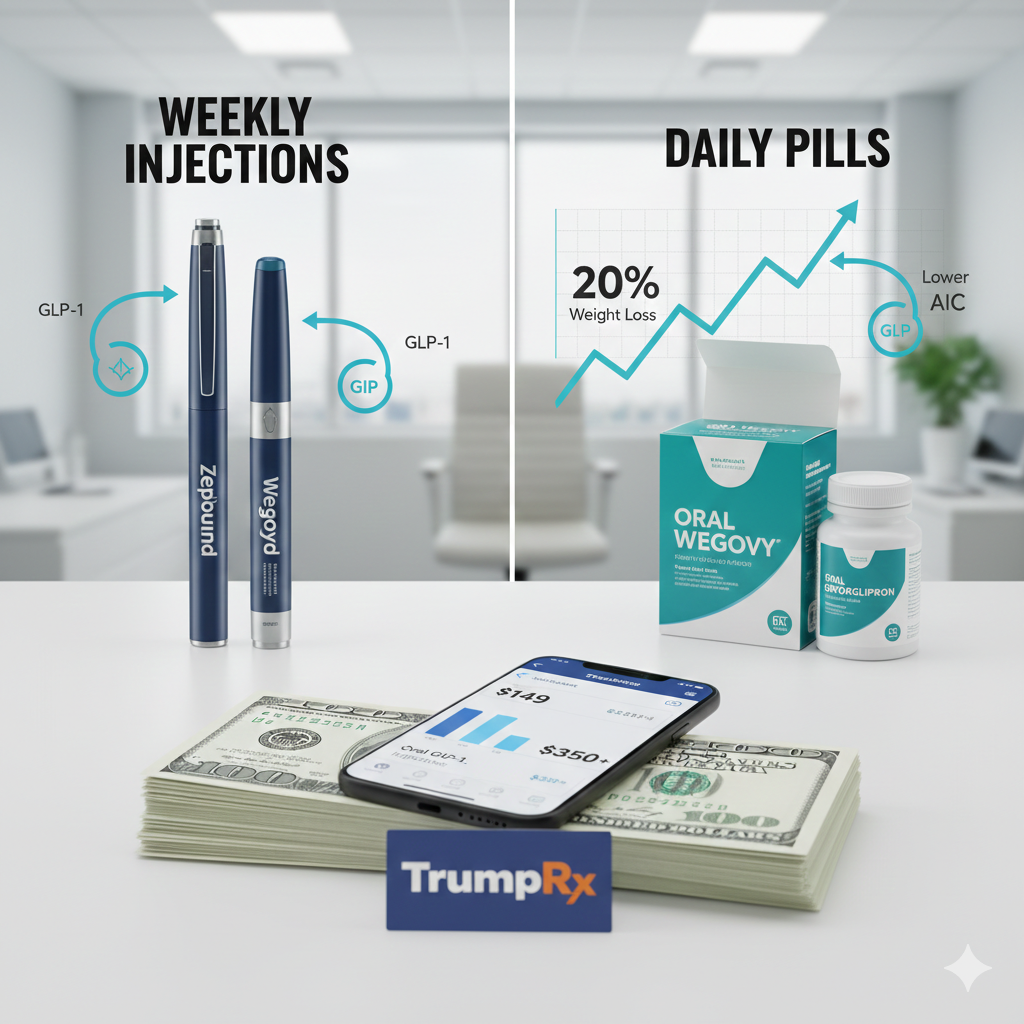
For years, the biggest drawback of GLP-1 therapy was the “needle factor.” As of January 2026, that has changed with the broad launch of oral Wegovy and Eli Lilly’s orforglipron.
| Delivery Method | Top Brands | 2026 Estimated Monthly Cost (Cash) | Pros/Cons |
| Weekly Injection | Wegovy, Zepbound, Ozempic | $350 – $550 (with TrumpRx/Coupons) | High efficacy; once-a-week convenience |
| Daily Pill | Oral Wegovy, Rybelsus | $149 – $299 | No needles; requires strict morning routine |
| Compounded | Semaglutide, Tirzepatide | $189 – $299 | Lower cost; quality varies by pharmacy |
The “TrumpRx” platform, launched in late 2025, has significantly impacted the market by connecting patients directly with manufacturer programs, bypassing traditional middlemen and lowering the average out-of-pocket cost for the uninsured to approximately $350/month.
Understanding Side Effects and Safety
No medication is without risk. Because GLP-1 agonists slow down your entire digestive system, gastrointestinal issues are the most frequent complaint.
- Common Issues: Up to 40% of users experience mild nausea, particularly during the first 48 hours after a dose increase. Constipation is also frequent due to slower gastric transit.
- Technical Risks: There is a rare but noted risk of pancreatitis and gallbladder disease. Patients with a family history of medullary thyroid cancer are generally advised to avoid this class of drugs.
- “Muscle Wasting”: A major concern in 2026 is the loss of lean muscle mass. Doctors now strongly recommend a high-protein diet and resistance training to ensure the weight lost is fat, not muscle.
As an E-E-A-T (Experience, Expertise, Authoritativeness, and Trustworthiness) standard, it is vital to source your medication through a licensed U.S. provider. The FDA has issued warnings regarding “research-grade” peptides found online, which lack the purity and safety testing of FDA-approved brands.
Insurance and Coverage: The 2026 Shift
The “coverage gap” is narrowing. In April 2026, Medicare officially expanded coverage for GLP-1 medications for beneficiaries with obesity and related comorbidities (like heart disease or sleep apnea).
- Commercial Insurance: Many “Fortune 500” employers now include GLP-1 coverage to improve employee retention, often with copays as low as $25–$60.
- Medicare Part D: Under new federal rules, copays for eligible seniors are now capped at $50 per month for brand-name injections.
Conclusion
GLP-1 therapy is more than just a diet trend; it is a medical revolution for metabolic health. Whether you choose a weekly injection like Zepbound or the new daily oral pills, the focus has shifted from “if” you can lose weight to “how” you can affordably sustain it. By leveraging the new 2026 pricing models and insurance expansions, more Americans than ever have a seat at the table for a healthier future.
Q&A(FAQ)
Q1. Is the GLP-1 pill as effective as the injection?
Clinical trials like OASIS 4 show that high-dose oral GLP-1 (like the Wegovy pill) can achieve about 17% weight loss, which is very close to the 15-20% achieved by injections. However, pills must be taken every single day on an empty stomach to be effective.
Q2. Do I have to stay on GLP-1 medications forever?
For many, obesity is a chronic condition. Data shows that when patients stop GLP-1 therapy without a significant lifestyle maintenance plan, they often regain a portion of the weight. Many doctors now use a “tapering” method to find a low maintenance dose.
Q3. How do I get the $350 price without insurance?
In 2026, you can use the TrumpRx platform or manufacturer savings cards found on the official brand websites. These programs allow cash-paying patients to bypass high retail markups at traditional pharmacies.
Q4. Can GLP-1 help with things other than weight?
Yes. Recent studies have shown that GLP-1 agonists may reduce inflammation, improve kidney function, and even lower the risk of neurodegenerative diseases like Alzheimer’s.
SEO Recommendations Section
1. SEO Title Recommendations
- GLP-1 Guide 2026: Costs, Side Effects, and the New Weight Loss Pill
- What is GLP-1? How the 2026 Pricing Shift Makes Weight Loss Affordable
- GLP-1 Injections vs. Pills: Which is Right for Your Weight Loss Journey?
2. URL Slug Recommendations
- glp-1-weight-loss-guide-2026
- glp-1-cost-insurance-comparison
- what-is-glp-1-medication
3. Meta Description Recommendations
- Everything you need to know about GLP-1 in 2026. Compare costs of injections vs. the new oral pill, understand insurance coverage, and see the real clinical results.
- Is GLP-1 the right choice for you? Explore our comprehensive 2026 guide on brands like Wegovy and Zepbound, including new $350 cash-pay options.
- Discover the science behind GLP-1. Learn how these ‘miracle’ hormones work, the common side effects to watch for, and how to get covered by insurance in 2026.
4. Image ALT Text Recommendations
- Comparison of GLP-1 injection pens and the new 2026 oral weight loss pill
- Scientific diagram of how GLP-1 targets the brain and stomach for satiety
- 2026 U.S. GLP-1 price chart for insured vs. cash-pay patients
5. Focus Keyword Recommendations
- GLP-1 for weight loss
- GLP-1 side effects
- GLP-1 cost 2026
- GLP-1 oral pill
- Wegovy vs Zepbound
- Medicare coverage for GLP-1
- TrumpRx pricing guide